


Western Canada: RV or car?

Having driven around Western Canada and travelled through the east of the country several times with RV, I can tell you that both ways of travelling have their perks. The right choice really comes down to your itinerary, your budget and how you like to travel.
1. RV or car: side-by-side comparison
Your itinerary, comfort levels, budget and when you plan to go are all factors that can tip the balance between a car and a RV. Here is a quick comparison to help you choose the best option for your road trip in Western Canada.
| # | Criteria | Priority | Car | RV |
|---|---|---|---|---|
| 1 | What kind of itinerary do you have in mind? | 🔴 ↑ | You want to mix cities, the Rockies and Vancouver Island, and value getting around easily. | You want to focus on national parks and wide-open spaces, with the chance to sleep right in the heart of nature. |
| 2 | What level of comfort are you looking for? | 🔴 ↑ | You like the comfort of a hotel, chalet or other accommodation at every stop. | You prefer having your own living space and not having to unpack your bags every night. |
| 3 | What is your budget looking like? | 🔴 ↑ | You are budgeting for car hire, fuel, accommodation and meals. | You are budgeting for vehicle hire, fuel and campsites, with the option to cook on board. |
| 4 | When are you travelling? | 🔴 ↑ | You are travelling in spring or autumn, when the weather can be more unpredictable. | You are travelling mainly from late spring to early autumn, when conditions are more favourable. |
| 5 | How many of you are travelling? | 🟠 → | You can easily find accommodation that suits your group size. | You are travelling in a group of 5 or 6 and want to share the same living space. |
| 6 | What type of accommodation do you prefer? | 🟠 → | You enjoy staying in different hotels, chalets or other properties along the way. | You love having your home on wheels with you every evening without having to pack and unpack. |
| 7 | How big a part do cities play in your trip? | 🟠 → | You want to explore Vancouver, Victoria or the mountain villages with ease. | You are happy to plan ahead for parking and use local public transport when needed. |
| 8 | How do you want to handle meals? | 🟢 ↓ | You enjoy eating out at restaurants or choosing accommodation with a kitchen. | You prefer picking up groceries and cooking directly on board. |
| 9 | When are you planning to book? | 🟢 ↓ | You want more flexibility when choosing your vehicle. | You are able to book well in advance, especially for campsites in national parks. |
| 10 | What kind of vehicle are you comfortable driving? | 🟢 ↓ | You prefer something easy to manoeuvre, ideally an SUV for extra comfort on long drives. | You are happy to adapt to a larger vehicle and plan your parking stops in advance. |
Torn between the two columns? That is completely normal. Start with the things that matter most for your trip, then narrow down your choice based on what you fancy.
2. Which vehicle should you choose for a road trip in Western Canada?
Got a rough idea? To help you decide, 4 main factors really tip the balance: your travel style, your itinerary, your budget and the time of year you are going.
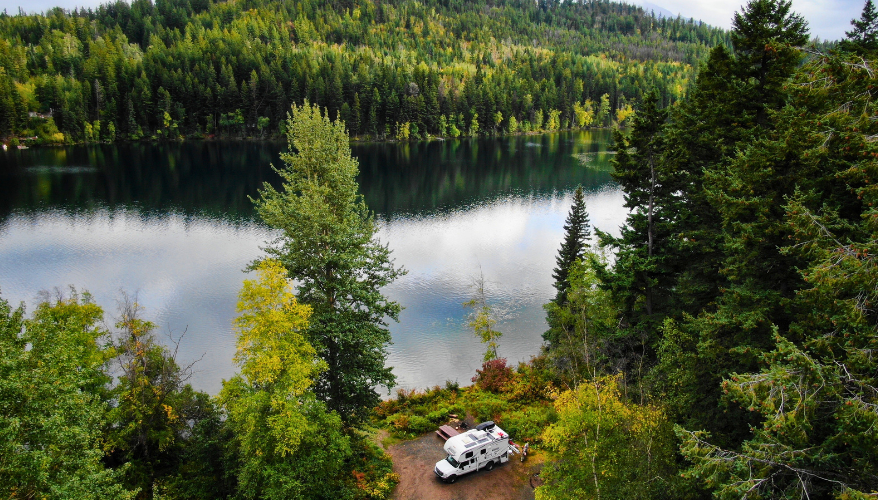
👤 Your travel style
Are you travelling as a family, a couple or with friends? Do you prefer the comfort of a hotel or the adventure of a home on wheels?
| A RV might suit you if you… | A car might suit you if you… |
|---|---|
| love sharing the same living space throughout the trip | prefer the comfort of hotels, chalets and other accommodation |
| are travelling in a group of 5 or 6 and want to stick together | enjoy discovering a new place to stay at every stop |
| want to cook some of your own meals | prefer making the most of restaurants and local services |
| like having your belongings close at hand without repacking your bags | are looking for a more compact and easily manoeuvrable vehicle |
💡 Good to know: both options work just as well for couples as they do for families. It really comes down to your travel style and the level of comfort you want.
How much would a RV cost for your trip?
Prices can vary quite a bit depending on your dates, how long you are staying and the model you choose. Get an initial estimate for your trip.
🗺️ Your itinerary
From the Rockies and Vancouver Island to the big cities, certain stops lend themselves better to one type of vehicle. Take a look at your route as a whole before making your choice.
| A RV might suit you if you… | A car might suit you if you… |
|---|---|
| want to sleep right in the heart of the Rocky Mountain national parks | plan to visit several cities like Vancouver or Victoria |
| love waking up surrounded by nature | want easy access to various sights and viewpoints |
| plan to spend several days exploring wide-open spaces | intend to explore Vancouver Island, especially Tofino and the surrounding area |
| are happy to plan your parking and journeys in advance | want more flexibility when making quick stops along the way |
💡 Good to know: a RV is brilliant for making the most of the Rocky Mountain national parks, while a car makes it much easier to explore cities and certain parts of Vancouver Island.
What if a car suits your itinerary better?
Hire rates vary depending on your dates, your route and the category of vehicle you choose. Compare available cars for your trip.
💰 Your overall budget
Rental costs alone will not tell you which option is more economical. To compare the two properly, you need to factor in all your holiday expenses.
| Cost category | Car | RV? |
|---|---|---|
| Accommodation | Factor in the cost of hotels, chalets and other places to stay. For a family of 5, you might need two rooms at certain stops. | Factor in campground fees, particularly in national parks. |
| Fuel | Fuel consumption is generally lower than with a RV. | Fuel consumption is higher, especially over long distances. |
| Meals | Budget for restaurants or accommodation with a kitchen, which are less common in Western Canada. | You can pick up groceries and cook on board to keep restaurant spending down. |
| Vehicle rental | The price depends on the car category, dates and trip duration. | The price depends on the model, dates and trip duration. Renting the vehicle generally costs more than a car. |
For 2 to 4 travellers, budgets can end up being quite similar: the higher cost of renting a RV can be offset by spending less on accommodation and food.
On the other hand, for a family of 5 or 6 people, a RV can be a particularly worthwhile option, especially when hotels require booking two rooms.
⛅ When to go
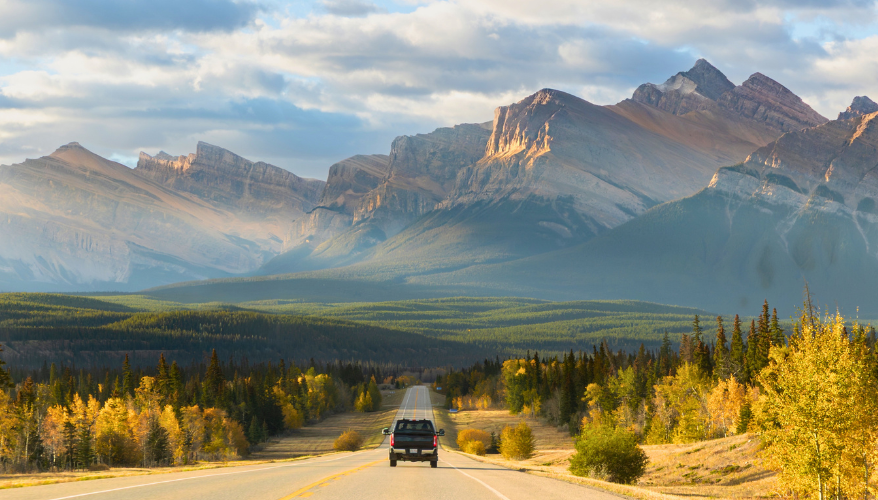
In Western Canada, your departure date matters a lot, especially if you plan on crossing the Rockies. Weather conditions can change quickly at altitude and impact your experience, particularly in RV.
☀️ From late May to September, conditions are generally better for travelling in a RV. Do bear in mind, however, that in spring, some areas of the Rockies may still be covered in snow and certain activities or roads might remain closed.
🍂 In September, tourist crowds start to thin out, temperatures are often milder and the first autumn colours begin to show. It is a fantastic time of year to experience Western Canada.
❄️ From late autumn through winter, the risk of frost and snow increases, particularly in the Rockies. Travelling in a RV is still possible under certain conditions, but you will need a vehicle equipped for cold weather and more driving experience.
3. What if you combined a car and a RV?
Yes, you certainly can! In Western Canada, you could, for instance, explore the Rockies in a RV, then carry on your trip by car on Vancouver Island.
This option lets you enjoy 2 different experiences: an immersive nature getaway in the national parks and the flexibility of a car to check out towns and various points of interest.
What might that look like?
Calgary → Banff → Lake Louise → Jasper → Calgary by motorhome
Then
Vancouver → Victoria → Tofino → Vancouver by car
This setup means sorting out a transfer between Calgary and Vancouver, as well as handling pick-up and drop-off logistics for both vehicles.
You also need to allow extra time and budget: vehicle changes, rental depot opening hours and any extra nights can quickly add complexity to the route.
💡 Key takeaway: combining a car and a RV is possible, but it is not necessarily the most practical or cost-effective choice. For a simpler road trip, keeping the same vehicle for the entire journey is usually the best approach.
4. Practical tips to know before you choose
A car makes getting around and parking much easier, especially in towns and at popular tourist sites. A RV requires a bit more forward planning: picking campsites, managing onboard equipment and getting used to the larger size. Fortunately, shuttle buses and the services provided by rental companies help make things easier.
🚐 Driving
- With a car, handling is generally straightforward. For long distances in Western Canada, an intermediate SUV can give you extra space and comfort.
- In a RV, Canadian roads are generally wide and well-suited to larger vehicles. However, you do need to take your time getting used to the dimensions, especially when turning and manoeuvring.
- You do not need previous experience driving a RV to hit the road! Rental companies provide instructions and guides to help you get familiar with the vehicle. Some also offer extra demonstrations.
🅿️ Parking
- With a car, finding a space is usually easier, particularly in towns and at smaller car parks near tourist sites.
- In a RV, remember to check height limits, time restrictions and parking options before you head out.
- In the Rockies, certain popular spots, such as the Banff Gondola, have limited parking. Shuttle buses can be a great alternative in these cases.
🏕️ Campings
- In the national parks of the Rockies, it is best to book your pitch in advance, particularly during peak season.
- Check that the campsite can accommodate the dimensions of your RV and find out what hook-ups are available: water, electricity and waste disposal facilities.
- A RV requires a few extra routines: hooking up your utilities when you arrive, monitoring your water levels and emptying waste tanks when needed.
🚌 Shuttles and transport
- Travelling in a RV does not mean you have to drive it everywhere.
- In certain destinations, local shuttle buses and transport services allow you to leave your vehicle parked up and enjoy local attractions more easily.
- In Banff, for example, booking certain gondola tickets can include access to a shuttle service, saving you the hassle of hunting for a space in a very busy car park.
💡 Key takeaway: a car generally offers more everyday simplicity, while a RV takes a bit more organisation. But with a few sensible habits, both let you fully appreciate the landscapes of Western Canada.
Car or RV?
You now have everything you need to make your choice. But since prices vary depending on your dates, itinerary and chosen vehicle, the best approach is to compare both options for your specific trip.
🚗 Compare car hire prices
🚐 Compare RV hire prices
Still can't decide?
That is completely normal. Two travellers could take the exact same trip and yet one would be better off in a car, while the other would suit a RV much better.
If you are still weighing up your options, our travel specialists are on hand to chat through your plans and help you choose the setup that best suits your travel style, budget and wishlist.


About the author
![Marion Vastesaeger]()
Marion Vastesaeger
Belgium
Based in Montreal for several years, I’m passionate about travel, nature, and wide-open spaces. I had the opportunity to explore Western Canada on a three-week road trip, discovering its breathtaking landscapes, must-see attractions, and hidden gems along the way. With years of travel experience, I love sharing my discoveries, local insights, and practical tips to help you plan an authentic and unforgettable Canadian road trip.

Based in Montreal for several years, I’m passionate about travel, nature, and wide-open spaces. I had the opportunity to explore Western Canada on a three-week road trip, discovering its breathtaking landscapes, must-see attractions, and hidden gems along the way. With years of travel experience, I love sharing my discoveries, local insights, and practical tips to help you plan an authentic and unforgettable Canadian road trip.


Leave a comment
Répondre à: -
delete my replyYour e-mail address will not be shared