


Step back in time: Canada’s most beautiful historic villages

Picture yourself walking down a dusty lane, exchanging smiles with costumed interpreters while the faint ring of a blacksmith’s hammer drifts through the air. Welcome to Canada’s historic villages, where history lives and breathes.
From the days of New France, through Indigenous traditions to the Western pioneers, these villages unite the past with the present.
No longer just reading signs... pausing at one of these villages transforms your road trip into a rich journey through Canada’s living history.
All you need to know about these authentic villages
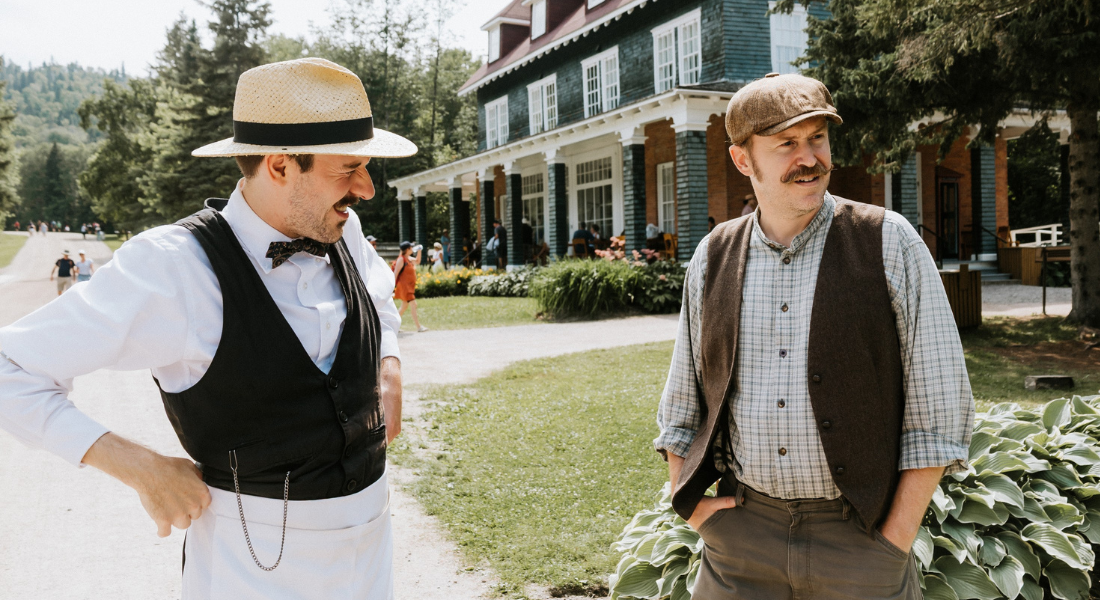
What activities are offered in a historic village?
Visitors can enjoy a wide range of activities:
- Visit an old school and talk to a period teacher (Village Québécois d’Antan, Val-Jalbert Historic Village)
- Discover an old workers' home in the middle of the forest (Val-Jalbert)
- Watch bread being made in a wood-fired oven, smell the aroma (Upper Canada Village)
- Watch a blacksmith hammer red-hot iron on his anvil (Barkerville)
- Listen to the cellist setting the beat in the village square (Village historique acadien)
- Experience Indigenous cultural traditions (Ksan)
- Immerse yourself in lively outdoor theatre performed by the villagers Val-Jalbert Historic Village)
Leave static museums behind. In these villages, you’re part of the scene, surrounded by buildings, age-old crafts, and costumed characters telling the stories of another time.
Who can visit a historic village in Canada?
A historic village is for everyone — families, couples, and curious travellers alike. It’s history made playful, immersive, and far from the well-trodden tourist routes.
Keep in mind that the language spoken often depends on where the village is located.
- In Quebec (Val-Jalbert and Village Québécois d’Antan), the visits are entirely in French.
- At the Village Acadien in New Brunswick, activities are mainly in French, but staff are often bilingual.
- In Ontario and British Columbia (Upper Canada Village, Barkerville, Fort Langley, Ksan, Heritage Park, Black Creek), English is dominant, though some brochures may be available in French on request.
Scenic road trips with a historic village stop

5 reasons to visit a historic village in Canada
Above all, it’s about seeing every landscape, town, or village along your route in a new light. A visit to a historic village in Canada on your road trip allows you to:
- Live an immersive, timeless experience
- Understand the country's history
- Share a different moment as a family or couple
- Support heritage preservation
- Enhance your itinerary with a quirky cultural touch
The 9 most beautiful historic villages to visit in Canada
(Because 10 is so last season)
First, let’s pinpoint these historic villages on the map of Canada:
#1. Val-Jalbert Historic Village, Quebec
📍 Chambord, Saguenay–Lac-Saint-Jean


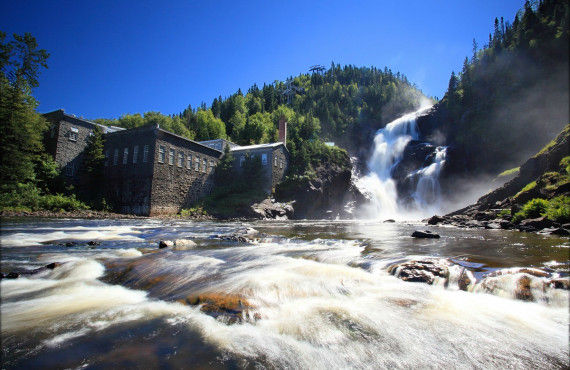


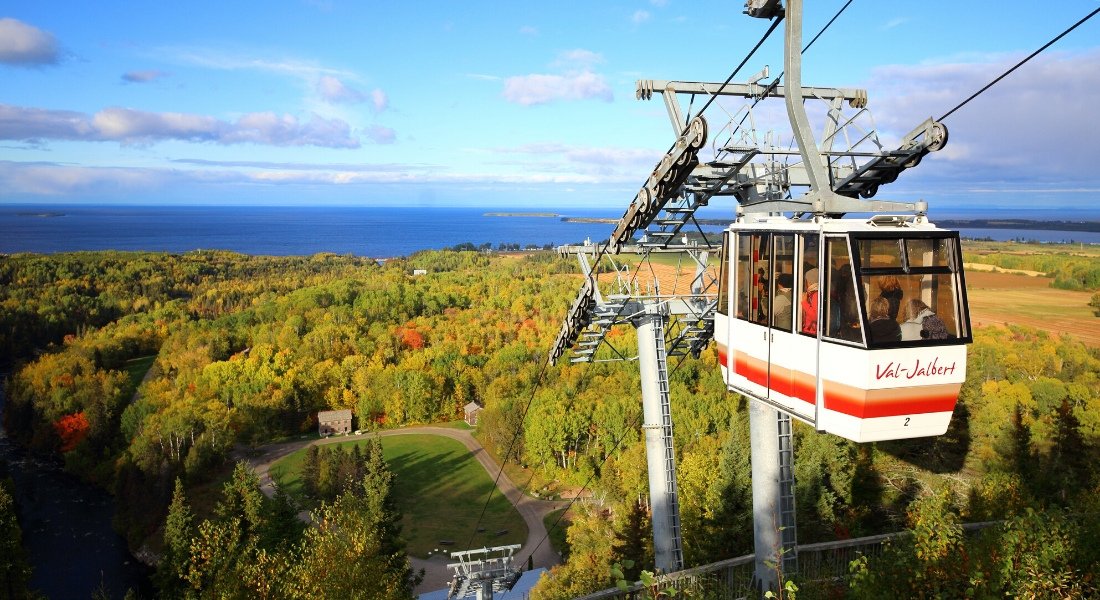
- What makes it unique: a workers' village frozen in the 1920s with authentic houses and the famous spectacular Val Jalbert waterfall, 72 meters high in a stunning natural setting. No wonder this historic village is one of the most famous!
- Must-do: take the cable car (or walk) to admire the Ouiatchouan Falls and Lake Saint Jean from above and chat with the costumed villagers.
- Practical info: Open from June to October. Camping directly on site. Ideal for a half-day visit. Activities in French, brochures and signs also in English.
- Check out Authentik’s dedicated section 🔗 Village Val Jalbert
- Visit the official website 🔗 valjalbert.com
#2. Village Québécois d’Antan, Drummondville
📍 Centre-du-Québec


- A leap into 19th-century Quebec, with 70 period buildings and over 100 characters bringing the village to life.
- Highlights: bread making in the wood-fired oven, old trades, and the must-see Haunted Village in autumn!
- Practical info: Open year-round with seasonal activities. Camping nearby. Allow 3 to 4 hours to fully enjoy. Visit in French only.
- Visit the official website 🔗 villagequebecois.com
#3. Fort Langley, British Columbia
📍 Fraser Valley, near Vancouver


- The birthplace of British Columbia, an old Hudson’s Bay Company trading post.
- Don’t miss: making black powder like in the 19th century, watching military reenactments, discovering the life of trappers, and camping within the wooden walls of a 19th-century Canadian fort.
- Practical info: Open year-round. Picnic area. RV parking nearby. Tours are in English. Note that brochures and signs are bilingual.
- Visit the official website 🔗 Fort Langley
#4. Upper Canada Village, Ontario
📍 Morrisburg, on the banks of the St. Lawrence


- Immersive plunge into the 1860s: cultivated fields, livestock, one-room schoolhouse, weaving, print shop…
- Not to miss: carriage rides, hot bread at the village bakery, and the magic of “Alight at Night” in winter at Upper Canada Village.
- Practical info: From May to October plus special events in winter. RV access nearby. Plan a full day. Staff and activities are in English (French brochures available on request at Upper Canada Village).
- Visit the official website 🔗 uppercanadavillage.com
#5. Barkerville, British Columbia
📍 Cariboo, North of Kamloops


- Gold rush in real life! A village of 125 buildings recreating the era of gold seekers.
- Highlights: Chinese laundry demonstrations, shows in the saloon, exploration of the mines.
- Practical info: Summer season (June to September). On-site camping. RV parking. Site, staff, and events in English only.
- Visit the official website 🔗 barkerville.ca
#6. Village Acadien, New Brunswick
📍 Caraquet, Acadian Peninsula


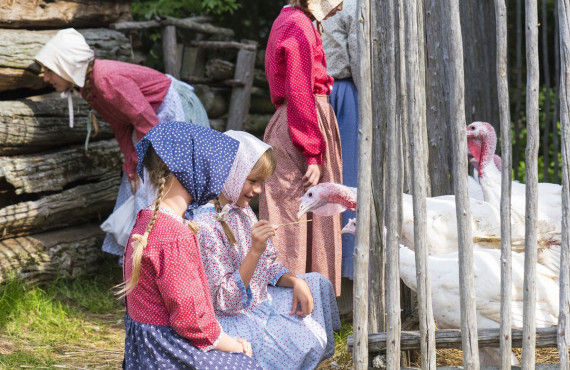

- A vibrant tribute to Acadian culture of the 18th and 19th centuries, this historic Acadian village is a rare gem. It features a 2.2km walking trail and no fewer than forty historic buildings brought to life by bilingual actors.
- To do: interact with artisans, taste traditional Acadian dishes, take part in folkloric celebrations.
- Practical info: Open from June to September. Plan for a half-day visit. Campsite nearby. Staff often bilingual. Activities available in French or English depending on the day.
- Check out Authentik’s dedicated section 🔗 Village Historique Acadien
- See the official website 🔗 villagehistoriqueacadien.com
#7. Ksan Historic Village, British Columbia
📍 Hazelton, Northern part of the province


- A living Gitxsan Indigenous site with traditional longhouses, carved totem poles, and a museum. There are no costumed actors; the atmosphere in this village is much more solemn and respectful.
- To discover: traditional dances, oral legends, ancestral Gitxsan art.
- Practical info: Guided tour recommended. Free parking. RV area nearby. Tours only in English.
- See the official website 🔗ksan.org
#8. Heritage Park Village, Calgary
📍 Calgary, on the edge of the Glenmore Reservoir


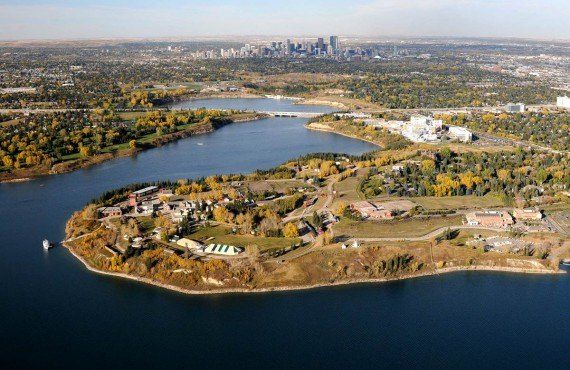
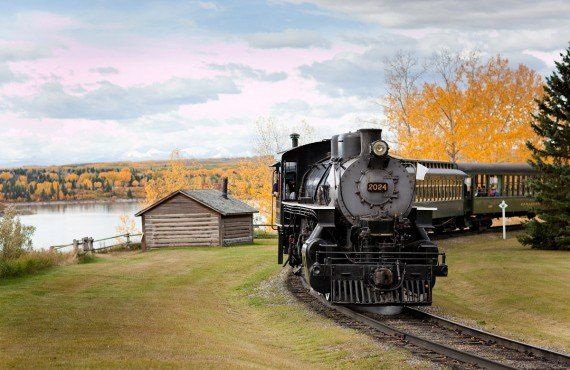


- A real journey into the Canadian West of yesteryear, just minutes from downtown Calgary. Heritage Park is the largest living history museum in Canada, with more than 180 historical buildings, either recreated or authentic.
- Not to miss: ride a steam train, visit a 1930s gas station, a print shop, a general store, or interact with the park’s artisans and costumed staff. In summer, the village is bustling with street performances, vintage rides, a ranch, and cruises aboard the paddle steamer S.S. Moyie.
- Practical info: Open from May to October for the outdoor historic area. Easily accessible by car, with large parking lot (RV-friendly). Activities only in English. No accommodation on site, but there are many hotels and campsites near Calgary.
- Check out Authentik’s dedicated section Heritage Park Village
- See the official website 🔗 heritagepark.ca
#9. Black Creek Pioneer Village, Ontario
📍 Toronto, Ontario


- What makes it unique: an open-air museum that brings to life a rural Ontario village from the 1860s, with over 40 historic buildings including homes, mills, workshops, and a school as well as a working farm.
- Must-do: attend a live demonstration at the blacksmith’s forge, taste fresh-baked bread at the heritage bakery, and explore the working farm with its heritage animals.
- Practical info: Open year-round with special events in every season (harvest festival, Christmas by lamplight, etc.). Located 30 minutes from downtown Toronto. Activities and signage available in English and French. Plan at least a half-day to enjoy the experience.
- See the official website 🔗 Black Creek Pioneer Village
Practical tips for your visit
When to visit a historic village in Canada?
Not all villages are open year-round, so it's best to plan your visit carefully:
-
Most, such as Val-Jalbert, Barkerville, Upper Canada Village, or the Village Acadien, are only open from June to September.
-
Others, like the Village Québécois d’Antan, Fort Langley, or the Indigenous village Ksan, are open all year round, with programs tailored to the seasons. In winter, activities may be reduced, but the atmosphere is often magical... especially when snow covers the scenery.
What are the usual hours?
In most historic villages, gates open between 9 am and 10 am and close around 4 pm or 5 pm. That leaves plenty of time to enjoy an immersive visit without having to rush. Still, check the hours on the website before your visit.
What gear do you need when visiting a historic village?
There is no specific gear required before setting off to explore these villages of yesteryear, but a few essentials in your bag can make all the difference:
- Comfortable shoes: gravel streets, wooden floors, or forest trails can quickly tire your feet. A good pair of closed shoes will help avoid minor inconveniences.
- A full water bottle, sunscreen, and a cap: even if some areas are shady, you'll spend a lot of time outdoors, often in direct sunlight. Also bring a light windbreaker just in case.
- A camera... or binoculars! Whether to capture the charm of century-old buildings, scenes with costumed actors, or to watch birds around the village, there are endless opportunities to marvel.
- A travel diary for the kids: let them try an "antique object hunt" to check items off as you go: wooden clogs, flour mill, blackboard, forge, vintage tractor... A fun way to experience history as a family.
- Insect repellent: better safe than sorry when it comes to mosquito bites.
- Allergy medication: Pollen, animals, hay—if you have allergies, we recommend bringing what you’ll need for maximum comfort in these often remote villages.
Can you camp at a historic village?
Good news for van, RV, or tent travelers: several historic villages offer accommodation on-site or just a stone’s throw away.
- At Val-Jalbert (Quebec), a 4-star campground awaits you directly at the village entrance, with spots for tents, RVs, and even comfortable mini-cabins. You can fall asleep to the sound of the Ouiatchouan Falls after a busy day.
- At Barkerville (British Columbia), a rustic campground (Lowhee Campground) is just a few minutes’ walk from the site. Perfect for extending your experience in a boreal forest setting.
- Near Upper Canada Village (Ontario), the Crysler Park Beach campground offers a beautiful riverside setting, just 5 minutes from the village. Some packages even include combined admission to the historic site.

For other villages, campgrounds are often available within a 10 to 15-minute radius, making it easy to add a stop to your road trip itinerary.
And if you’re passing through Calgary, Heritage Park can easily be visited during the day from an urban campground or hotel. There’s no accommodation on site, but you’ll find plenty of options nearby.
What are the usual prices to visit a historic village in Canada?
Historic villages are accessible at reasonable prices, especially considering the wealth of the experience.
- Adult: between $15 and $40 CAD depending on the site and the season.
- Child (often ages 6 to 17): between $8 and $25 CAD.
- Family: special packages are offered from $45 to $110 CAD for two adults and two children.
Some special events (evening shows, Halloween or Christmas events) may have a slight surcharge, but they’re well worth it.
Comparative Table of Historical Villages in Canada
Legend:
- ✅ = available / well suited
- ⚠️ = partially or under conditions
- ❌ = not offered on site
| Village | Location | Opening | Walking | Accommodation | Dining | Accessibility |
|---|---|---|---|---|---|---|
| Val-Jalbert | Quebec / Chambord | Summer (June to early Oct.) | ~2–3 km | ✅ Camping, hotel | ✅ Bistro + snack bar | ⚠️ Partially adapted |
| Village Québécois d’Antan | Quebec / Drummondville | All year round | ~1.5 km | ❌ (camping nearby) | ✅ Traditional restaurant | ⚠️ Partially adapted |
| Fort Langley | B.C. / Fraser Valley | All year round | ~1 km | ❌ | ✅ On-site café | ✅ Well adapted (Parks Canada) |
| Upper Canada Village | Ontario / Morrisburg | May to Oct. + special in Dec. | ~3 km | ❌ (camping 5 min away) | ✅ Restaurant + bakery | ⚠️ Partially adapted |
| Barkerville | B.C. / Cariboo (North Kamloops) | Summer (mid-June to Sept.) | ~3–4 km | ✅ Rustic camping | ✅ Several options | ⚠️ Partially adapted |
| Village Acadien | N.B. / Caraquet | Summer (June to Sept.) | ~2.5–3 km | ❌ (camping nearby) | ✅ Snack bar + bakery | ⚠️ Poorly adapted |
| Ksan Village | B.C. / Hazelton | All year round | ~1 km | ❌ | ❌ (picnic area) | ⚠️ Partially adapted |
| Heritage Park Village | Alberta / Calgary | May to Oct. (outdoors) + all year (museum) | ~2–3 km | ❌ (accommodations in town) | ✅ Restaurant, café, snack bars | ✅ Well adapted |
| Black Creek Pioneer Village | Ontario / Toronto | All year round | ~2 km | ❌ (accommodations in town) | ✅ Heritage bakery + café | ⚠️ Partially adapted |
Exploring Canada’s historical villages is much more than a tourist activity: it’s a true return to the roots, a unique way to live history through vibrant places, faces, and traditions.
Whether you’re traveling as a family, as a couple, or on a camper van road trip, these cultural stops will add a touch of authenticity and emotion to your journey.
Useful Links:
👉 Plan your road trip 👉 Compare vehicles
Ready to step back in time? Give us your opinion in the comments!
FAQ
What are the most famous historical villages in Canada?
What is the most beautiful historical village in Canada?
What is the most beautiful historical village in Canada?


About the author
![Justine De Bandt]()
Justine De Bandt
Montreal, Quebec
I traded Normandy’s drizzle for Quebec’s snowy winters and road trips through pine forests! I’m far too curious to sit still, and never short of something to say... So I share my discoveries, hoping to inspire others to find out for themselves if winter really is colder on the other side of the world.

I traded Normandy’s drizzle for Quebec’s snowy winters and road trips through pine forests! I’m far too curious to sit still, and never short of something to say... So I share my discoveries, hoping to inspire others to find out for themselves if winter really is colder on the other side of the world.
 Instagram


Leave a comment
Répondre à: -
delete my replyYour e-mail address will not be shared
2 comments